If you’ve read my previous blog, you now have a better understanding of hoof biomechanics. Having a healthy frog is a key component of proper biomechanics and one of the secrets to being able to perform well barefoot.
Is poor frog health responsible for lameness?
According to the American Farriers Association, 80% of horses would fail a lameness exam (2). Quite the statement but regrettably, it’s probably true. I regularly encounter horses with short choppy ‘toe first’ strides.
Although these horses show no obvious ‘head bob’ when trotted out, they are lame – it’s just that they’re equally lame on both feet. If a vet applies a nerve block in one foot, they begin to show lameness on the opposite foot, thus exposing their pain.
I also agree with the opinions of Drs. Bowker and Taylor that many vets, farriers and horse owners don’t recognize underdeveloped frogs. We commonly see weak, diseased frogs but ‘common’ does not equal ‘normal’ or ‘healthy’. It only means that most horses have never had the chance to build an adequate frog.
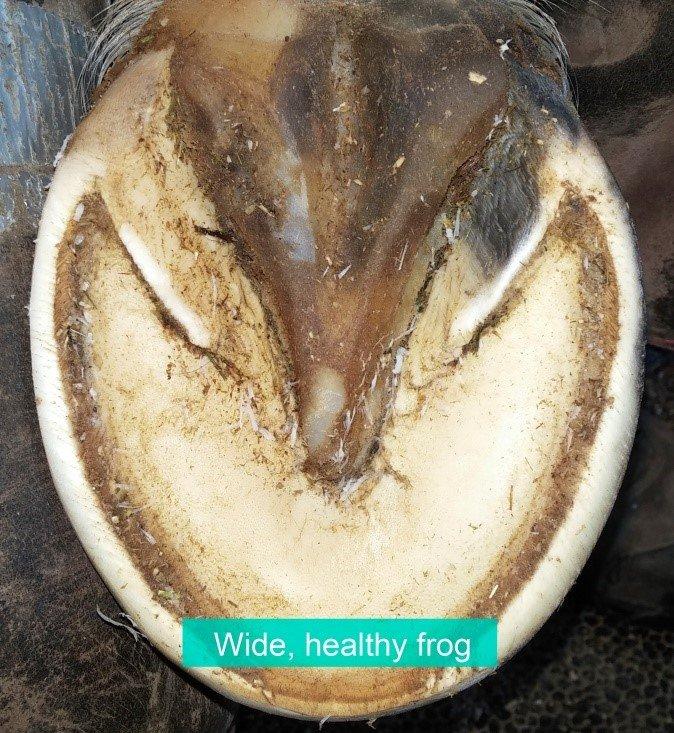
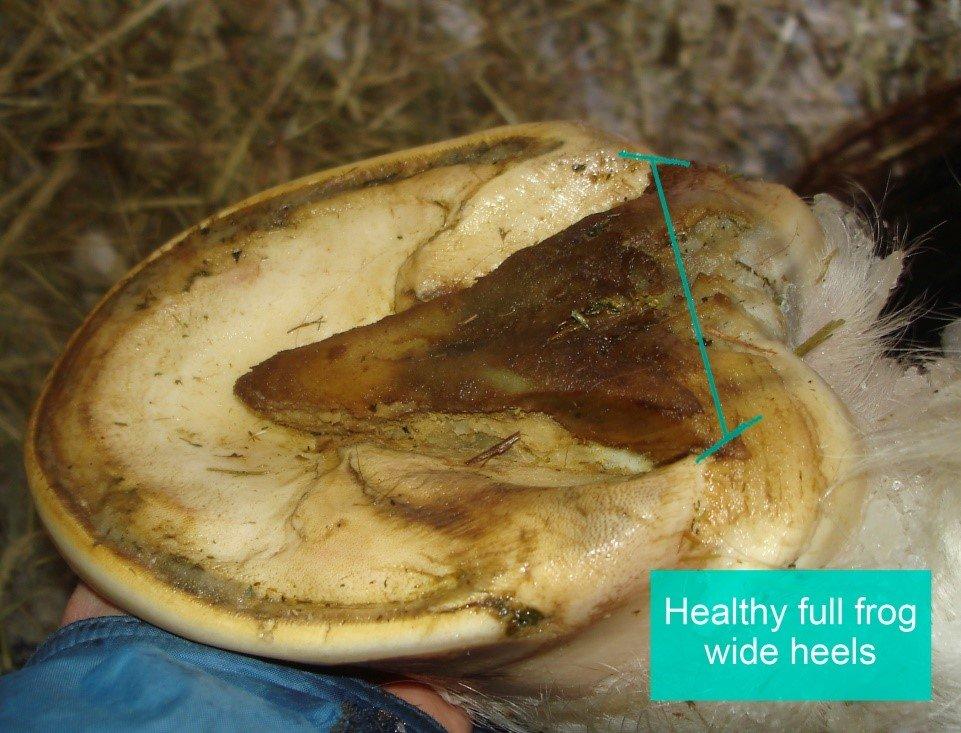
I certainly didn’t know what a good frog was 10 years ago. The best frogs I ever saw were on wild horse specimens during an anatomy workshop at Auburn University in Alabama. Those hooves taught me what a good frog should look like and I now strive to achieve such frogs both on my clients’ horses and my own.
Examples of Good Frogs on Domestic Horses:
What's your top priority with your horse's health?
Examples of Poor Frogs:


This horse with navicular problems was obviously not using the back part of his foot. The unhealthy frog was undoubtedly a contributing factor to his lameness issues.
How do Wild Horses Develop such Good Frogs?
Simply put: movement. Lots and lots of correct heel-first movement on hard and varied terrain. Not standing in urine, manure and mud doesn’t hurt either. As trimmer K.C. Lapierre explains, proper stimulation promotes proper growth (3).
Get your horses outside, people! No matter how clean your stalls are, they confine your horse (less movement, less blood circulation) and the cushy stall mats and shavings inhibit the frog tissues from toughening up.
Remember that hooves adapt to their terrain. That same rule applies to their frogs. Domestic horses ridden and living on soft ground may never develop the massive tough frogs of wild horses living in arid rocky areas.
That being said, they may not need them either if they are ridden in fluffy indoor riding arenas. Still, the better their frogs, the sounder they will remain over their lifetime.
Proper nutrition is also critical. When horses suffer from Equine Metabolic Syndrome (translation: they are fat!) and/or lack balanced vitamins and minerals in their diet, they often struggle to fight off infections such as thrush (just like humans, diabetics struggle with foot infections for that matter).
If you seem to constantly fight thrush despite good hoof hygiene, I suggest reviewing your horse’s nutrition with a qualified nutritionist.
Understanding the Frog Inside and Out
We all know how to locate the frog from the outside, but have you ever thought of which areas it helps protect inside the hoof? The frog sits under the digital cushion and between the lateral cartilages. It reaches forward towards the toe and helps cushion the area where the deep digital flexor tendon attaches to the coffin bone (P3).
Let’s not forget that the navicular bone, proximal suspensory and impar ligaments sit just above where the frog narrows. This is a fragile area of the foot, and the frog plays a critical role in protecting it.
Research from Dr Bowker (1) has shown us how excessive stress to the navicular area can lead to damage to the delicate impar ligament that attaches the navicular bone to P3.

Now that we know all of this, we can better understand why a thick healthy frog will help accomplish four things:
- Better biomechanics as a horse will want to land on the frog as opposed to the toe
- Cushioning of the delicate navicular region
- Improved shock absorption and, more than likely
- Less lameness
Next time I will give you strategies to improve, maintain and develop a healthy frog.
Frequently Asked Questions
Here are some frequently asked questions about the frog in horse hooves:
A healthy frog plays a major role in equine soundness by supporting shock absorption, protecting sensitive structures within the hoof, and encouraging proper heel-first movement. Horses with weak or underdeveloped frogs often develop short, toe-first strides that can indicate discomfort even when obvious lameness is not visible. Strong frog tissue supports better biomechanics and may reduce strain on structures associated with navicular pain.
Poor frog health can contribute to lameness by reducing a horse’s ability to comfortably use the back portion of the hoof. When frogs become weak, diseased, or underdeveloped, horses often avoid heel-first landings and place more stress on other parts of the foot. Over time, altered movement patterns may increase strain on sensitive tissues and contribute to chronic soundness issues.
The frog protects important internal hoof structures by providing cushioning and support beneath the digital cushion, lateral cartilages, and navicular region. Frog tissue also helps absorb impact near the attachment point of the deep digital flexor tendon on the coffin bone. This protection reduces stress on delicate ligaments and other structures located in the back portion of the foot.
Poor frog health is often associated with narrow frogs, chronic thrush, deep central sulcus cracks, and a tendency to land toe-first rather than heel-first. Some horses develop short, choppy strides or appear less comfortable on firm footing. Persistent infections and reduced frog development can indicate that hoof function is not operating as effectively as it could.
Wild horses develop healthy frogs through constant movement over firm, varied terrain that encourages regular heel-first landings. Daily travel across rocky, dry landscapes naturally stimulates frog growth and toughens hoof tissues. Consistent movement also promotes circulation within the hoof, allowing structures in the back of the foot to develop more fully than they often do in confined environments.
Regular turnout supports frog development by increasing movement and exposing the hoof to a wider variety of surfaces. Horses that spend most of their time in stalls generally experience less hoof stimulation and reduced circulation compared to horses living outdoors. Greater daily movement encourages stronger frog tissue and helps maintain healthier hoof function over time.
Soft footing can limit frog development because hoof tissues adapt to the surfaces they encounter most often. Horses living and working primarily on soft ground may not develop the thick, durable frogs commonly seen in horses traveling over firmer terrain. Surface conditions influence how much stimulation the frog receives during daily movement.
Proper nutrition supports frog health by helping maintain healthy hoof tissues and supporting normal immune function. Horses with Equine Metabolic Syndrome or diets lacking balanced vitamins and minerals may have greater difficulty managing infections such as thrush. When frog infections persist despite good hoof care, evaluating the feeding program may reveal nutritional factors affecting hoof quality.
Recurring thrush is often linked to factors beyond hoof hygiene alone, including poor frog development, metabolic issues, and nutritional imbalances. Horses with compromised hoof health may struggle to resist infections even when stalls and paddocks are kept clean. Persistent cases often benefit from a broader evaluation of overall hoof management, turnout, and diet.
Stronger frogs improve hoof biomechanics by encouraging horses to land heel-first and distribute impact forces more effectively throughout the foot. Healthy frog tissue supports shock absorption and allows the back portion of the hoof to participate more fully during movement. Better hoof function can reduce stress on sensitive structures and promote long-term soundness.
Summary
A healthy, well-developed frog is essential to hoof biomechanics and is a key factor in barefoot soundness and overall performance.
- Many horses show subtle, bilateral lameness linked to weak or diseased frogs, and underdeveloped frogs are common but not normal or healthy.
- Wild horses develop strong frogs through frequent heel-first movement on varied, firmer terrain and by avoiding prolonged exposure to wet, dirty footing.
- Domestic management that emphasizes stalls, soft footing, and limited turnout hinders frog toughening and blood circulation, increasing the risk of frog problems.
- Nutrition strongly influences frog health; balanced minerals and managing metabolic issues like EMS help horses resist infections such as thrush.
- The frog cushions and protects structures like the digital cushion and navicular region, promotes heel-first landing, improves shock absorption, and helps reduce lameness.
References
- Robert M. Bowker, VMD, PhD, The concept of the good foot, it’s evolution and significance in a clinical setting, Care and rehabilitation of the Equine foot 2-35, 2006
- American Farrier’s Journal Nov. 2000, v.26 #6
- Biomechanics to a better hoof, The Horse’s Hoof, issue #31, summer 2008